
Y Tymbl · Carmarthenshire · est. 1893

Save
the
Workies

Achub y Workies — calon y pentref ers 1893.

The Great Mountain Workingmen's Club opened in 1893, opposite the pit gates, for a booming village with six hundred men underground and one overwhelmed pub. Tumble has kept it ever since — through court stings, hostile breweries, strikes and the loss of the colliery itself. Now it's carrying debts it cannot pay, and unless we act it goes under the hammer — most likely to a developer.

We can save it the way it's always been kept: a little each, from many of us.

So far, the village has pledged

£0 a month, between us — chasing £2,500 a month

to hit £2,500/month

Milestone 1 — cover most of the costs

  • 0 people pledging monthly
  • £0 given in one-off donations
  • Updated

Times are tight for everyone — that's why it starts at £2 a month, or a £5 one-off. Less than one pint, and it counts you in.

All or nothing: if we don't hit £2,500/month by 1 September, every penny is refunded.

You choose your amount — from £2 a month · cancel anytime · secure checkout by Stripe

The roll of honour

The village is showing up

Every pledge and donation lands here the moment it happens. Put your name on it at the checkout or on the thank-you note — or stay anonymous and count just the same.

New — member perks

Save the Workies & get exclusive perks from businesses that support the cause

Anyone pledging monthly is a member — and members get something back. Every member gets free lifetime membership of ParrotPal and Turtle Method, together worth £399+: workouts, help tracking your nutrition for weight loss, and real community support. Local businesses are adding their own offers, and this wall grows as the valley gets behind it — so you save the club and come out ahead.

Run a local business? Offer members any perk — your choice, change it any time — and get your logo on this wall, shout-outs on our channels and a place in the press story. Email the campaign and you're in.

Become a member — from £2/month

£120,000

of debt the club cannot pay alone

Auction

is where it goes if we do nothing — and developers will be bidding

133 years

of Tumble's life under one roof. Once it's gone, it's gone.

The plan

Three milestones, one club

Everything on this page rolls up into one number: steady monthly pledges. Grants and one-off gifts help enormously, but funders and banks back clubs that can show reliable income. The monthly figure is what proves Tumble means it.

£2,500/month

Cover most of the costs

Takes the panic out of the month. It doesn't secure the club by itself — but it proves Tumble wants this saved, and it buys the time to finish the job. Hope, funded.

£5,000/month

Keep the doors open

Covers the running of the club in full and takes it off the auction table. The village keeps ownership. This is the line between open and gone.

£10,000/month

Clear the debt, unlock the rebuild

Everything above, plus a proper repayment plan for the £120,000 debt. A solvent, steady club is one grant funders and government schemes will back — and that's what turns the Workies from a drinking club into a modern community hub: café, food, cinema nights, windows in the back room.

Where the money goes, in order

  1. Keep the lights on. Staff, stock, insurance, energy — the boring bills that close clubs.
  2. Clear the debt. Around £120,000, paid down month by month and renegotiated where we can.
  3. Modernise. Working with local trades and grant funders to rebuild the Workies as a true community hub.

Our promise: every month we'll publish what came in, what went out, and what's left of the debt — on this page. No secrets in this club.

Villages like ours have already done this

  • Cross Hands — three miles up the road: the 1932 miners' hall was saved and reopened as a charity-run cinema after a village campaign.
  • Saith Seren, Wrexham — saved from closure by pledges of £3,000 a month in standing orders; eleven years later it bought its freehold.
  • Tafarn Sinc, Rosebush — the village raised £400,000 in four months and has run its pub ever since.
  • 210 community-owned pubs and clubs now trade across the UK — and 9 in 10 community-owned ventures are still going after five years.

Your Workies

Submit your memories

Married in the big room? First pint at that bar? Sang on the stage, or watched your grandfather play snooker under those lights? Send it in — with photos if you've got them — and we'll build the village's memory wall right here.

It goes straight onto the wall below. By sending, you're happy for your name, connection, memory and photos to appear on this page — keep phone numbers and addresses out of the text. The committee removes anything that shouldn't be here.

The request board

What would bring you down?

Honest answers only — this is how the committee decides what the money gets spent on. What would you love to happen at the Workies? What would actually make you turn up on a Tuesday?

See every idea & vote →

Worth saving for

What the Workies becomes

Saving it is step one. The plan is to take the Workies beyond a drinking club and turn it back into what the colliers meant it to be — the place the whole village uses.

  • A proper café — good coffee, breakfast baps, somewhere to sit that isn't your kitchen
  • Sunday roast — the kitchen fired up again, families round the big tables
  • Cinema nights — the big back room, lights down, kids in their pyjamas
  • Windows in the back room — daylight where the concrete wall is now
  • Kids' and youth nights — somewhere for teenagers that isn't a bus shelter
  • A warm welcome in winter — one heated room shared beats twenty cold ones
  • Live music again — there's a stage under that clutter
  • Rooms for everyone — clubs, classes, parties, meetings, whatever Tumble needs

Still a pint with your butties. And everything else as well.

What's actually here

You couldn't build this again

People hear "club" and picture a bar. Come and look. There's a main hall with a proper stage. A big back room. A full kitchen. Snooker, pool and darts. The bar, yes — and the rugby club and the football club calling it home. There isn't another room like it for miles, and no developer is ever going to build the village a new one.

  • Main hall & stage
  • The big back room
  • Full kitchen
  • Snooker, pool & darts
  • The bar
  • Home of the rugby & football clubs

What this place is

A club that was born fighting

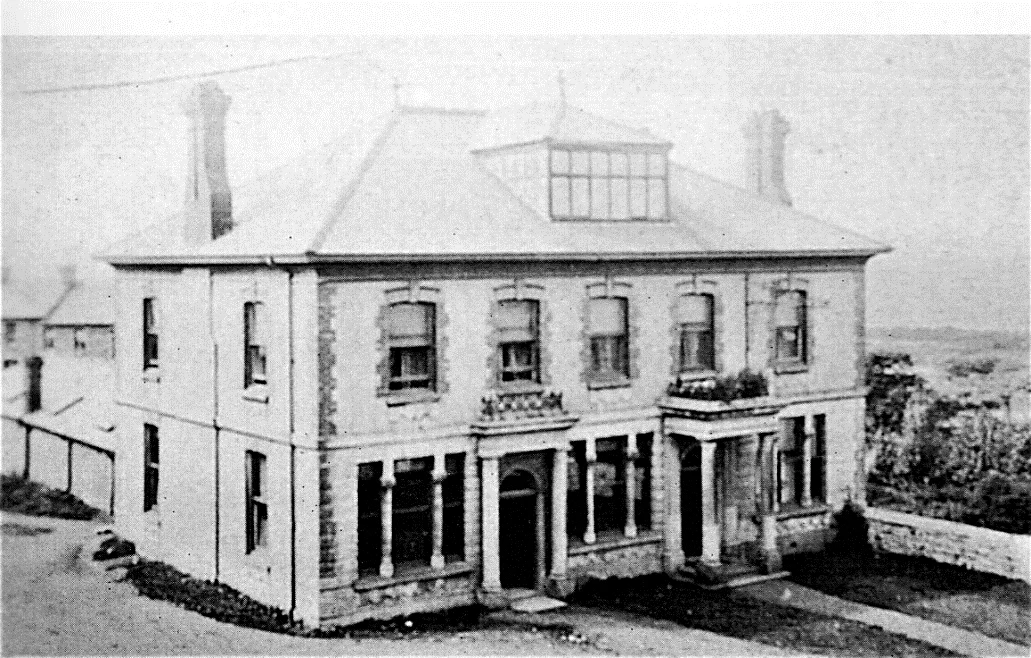
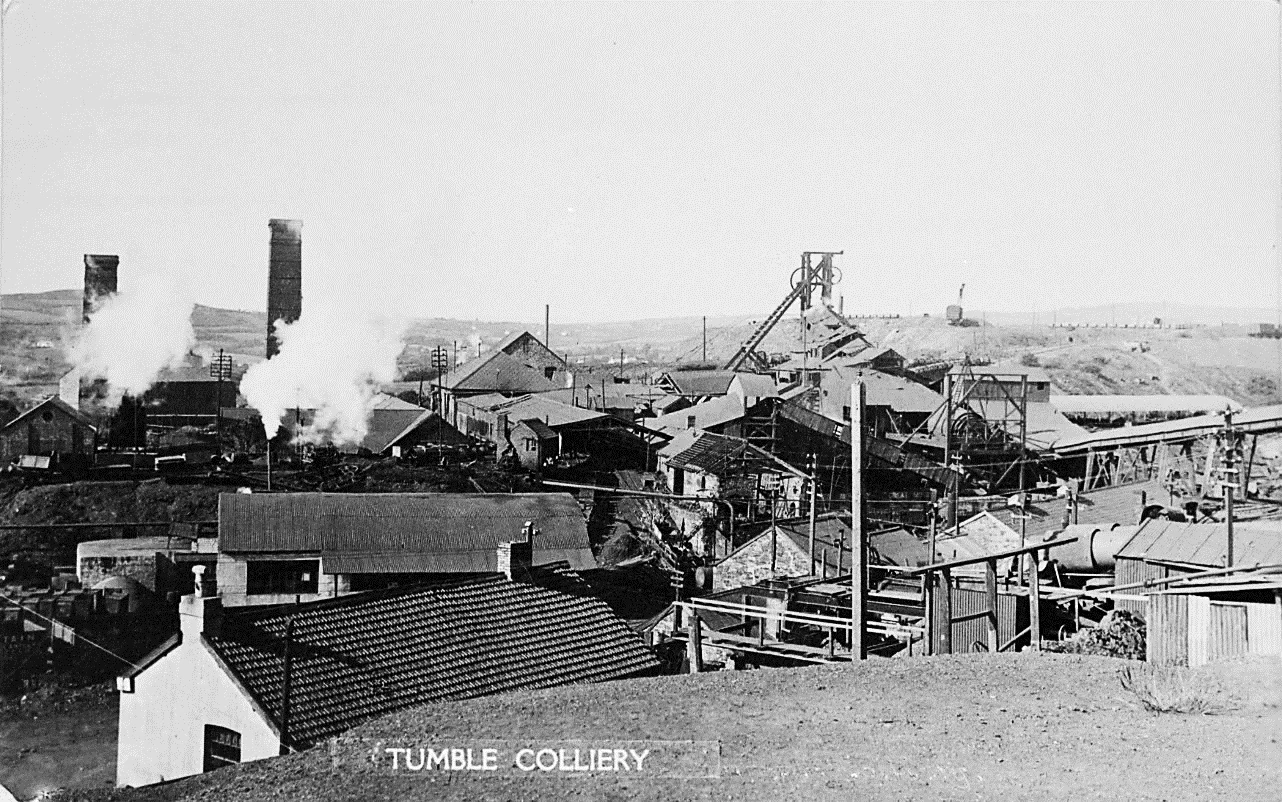
When work began on the Great Mountain Colliery in 1887, Tumble was little more than an inn and a few farms. Within a decade the village had doubled in size — new houses street by street, six hundred men underground, and one overwhelmed pub. So in 1893 the colliers got their own club: a hall so grand, at a cost of some £3,000, that old members marvelled anyone had dared build it in a place this size. The proof, as collier Wilf Timbrell put it, was the seam of "black diamonds" under the Graig-y-Lletty. The club went up directly opposite the colliery gates.

The establishment then spent fifteen years trying to strangle it. An Inland Revenue sting in 1896 — two officers taking lodgings in the village, a shilling paid at the door, a drink bought at the bar — put the club's manager in front of the Llanelly Police Court. Licence applications in 1908 and 1909 were fought by rival breweries and refused by the bench, despite a petition signed by the vicar, the curate, the Baptist minister and the colliery officials. The club carried on regardless: nearly three hundred members, healthy books, not a single complaint against it — and when Bethel chapel needed water for baptisms, it was the club that supplied it.

The papers never liked the place, either. Tumble's great strike of 1893 — the very year the club opened — was put down with troops, and the Western Mail never let the village forget it: as late as 1906 it was dismissing a Saturday night here as "another wild orgy of lawlessness". The men it sneered at were colliers who paid the schoolmaster a penny a week for what schooling they got, and who filled this club to the porch on pay nights. Hard men, hard trade, one hall of their own.

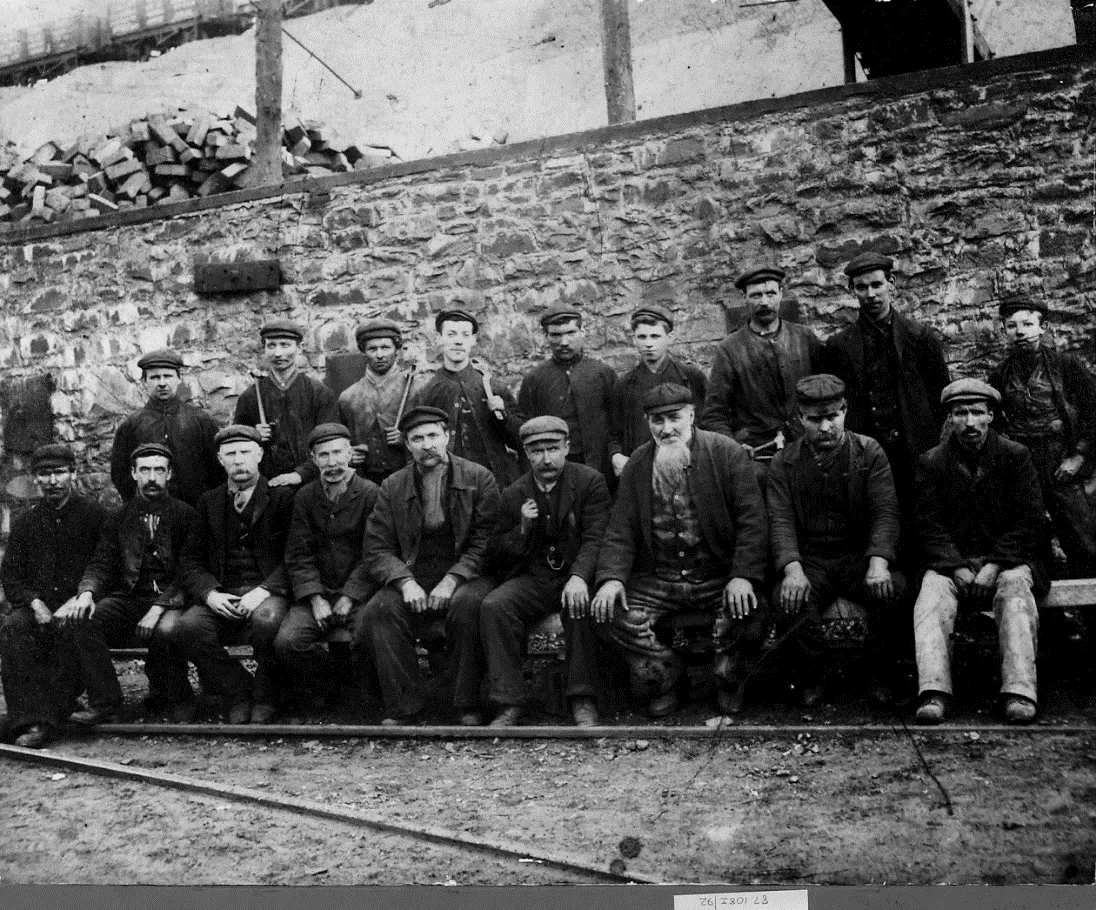
Coal paid for all of it, and the village paid dearly for the coal. The Great Mountain had the worst safety record in the Gwendraeth Valley: sixty-one men never came home from it. One was William Owen John of Park View, who survived four years of Gallipoli and the Western Front, went back underground, and was killed on his second day. The teas after those funerals were poured in this club. So were the wedding toasts, the christening cups and every homecoming since.

The pit closed in 1962. The club carried on. For 133 years it has been where Tumble gathers: home of Tumble RFC — the Magpies, black and white like the bird on this page — whose lounge, Lolfa'r Llewod, is named for the three British & Irish Lions this one village has produced. The football club. Prize snooker, in the village that raised a twice world amateur champion. The Christmas do, the christening after the chapel and the tea after the funeral. Ask anyone in Tumble — they've got a memory in that room.

133 years of fighting — the bench, the breweries, the strikes, the dust, the pit closing — and the Workies outlived the lot. It would be a strange thing to let a bank statement finish what none of that could.

The Workies isn't a company. Nobody holds shares in it and nobody takes a profit out of it. It's run by a volunteer committee and it belongs, in every way that matters, to the village. Which means it is ours to lose — and ours to save.

First pints and last goodbyes —
the Workies has held them all.
  1. 1887Work begins on the Great Mountain Colliery; Tumble grows around the pit
  2. 1893Troops put down the strike riots — and the same year, the colliers get their club, an enormous hall opposite the colliery gates
  3. 1896An Inland Revenue sting puts the club manager in court for pouring a drink. The club survives
  4. 1897Tumble RFC founded for the colliery's workers — the Magpies, black and white
  5. 1908Rival breweries fight the club's licence at the Llanelly bench, twice. The club survives
  6. 1962The colliery closes, having taken 61 village lives. The club carries on as the village's living room
  7. 1966The big concert room is added — the same big room we're saving today
  8. 2026Debts of around £120,000 put the club weeks from auction
  9. NextThe village saves it — that's this page

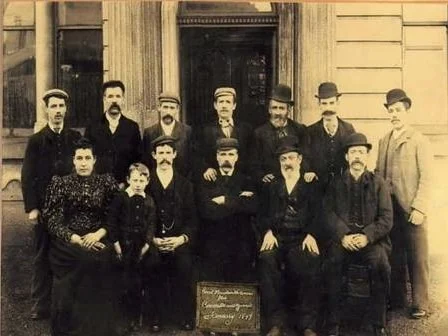
Historical detail drawn, with thanks, from Jeff Alexander's history of Tumble. The club's founders were photographed on its steps in the 1890s — send us your family's Workies photos below and we'll build the wall their story deserves.

Press & media

Covering this story?

Nobody has written this story yet — no outlet has covered the Workies' fight, so first interviews are there for whoever calls first. We can arrange committee members, members of fifty years' standing, the rugby and football clubs, and families of the colliers who built the hall. Photography inside the club is welcome by arrangement.

The club
Great Mountain Workingmen's Club — "the Workies" — 1 Heol y Neuadd, Tumble (Y Tymbl), Carmarthenshire SA14 6ER
Founded
1893, built and paid for by miners of the Great Mountain Colliery, directly opposite the pit
Ownership
Member-owned, run by a volunteer committee — effectively owned by the village
The problem
Around £120,000 of debt; without a rescue, the building goes to auction
The campaign
Monthly pledges from £2; first milestone £2,500/month to steady the club, £10,000/month to clear the debt and unlock the rebuild into a full community hub
The angles
A 57% Welsh-speaking village; three British & Irish Lions from one village rugby club that calls the Workies home; a hall that survived an 1896 Inland Revenue sting and a fifteen-year licensing war with the breweries; a village the Western Mail was still sneering at in 1906, still standing; a colliery that took 61 village lives, whose funeral teas were poured here; and the Senedd announced a Community Right to Buy Bill this month — this club is why it matters
Contact
Email the press team · 07000 000000

Straight answers

Questions people ask

Who actually gets my money?

The club — a member-owned organisation run by a volunteer committee. Nobody draws a profit. We publish the figures on this page every month: what came in, what went out, and what's left of the debt.

What if the club can't be saved?

Simple: it's all or nothing. If the village hasn't pledged £2,500 a month by 1 September, we refund every payment and cancel every pledge — nobody's money sits in a lost cause. And if the club ever closes despite hitting the target, we stop every pledge immediately. That's the promise.

Can I cancel my monthly pledge?

Anytime, in a couple of clicks, no questions asked. The link is in every payment email from Stripe, or just get in touch and we'll do it for you.

Is it safe to pay online?

Payments run through Stripe, the same system used by millions of businesses. The club never sees or stores your card details.

Is this a charity? Do you do Gift Aid?

Not yet — the Workies is a members' club, which is why it could get into this mess quietly. As part of the rescue we're taking advice on the right long-term structure (including a charitable arm), which could add Gift Aid to donations later. We'll update this page when that changes.

I've no money spare — can I still help?

Honestly, yes. Share this page in every group chat you're in. Send a memory and photos. Come to events. And if you've got a trade or a skill — accounts, building, marketing, cooking — tell us. The rebuild will run on exactly that.

I run a business / I want to give more than £250

Talk to us. We're putting together sponsorship for local firms — your name on the wall, the events, the shirts — and we'd be glad to discuss larger gifts or paying off a chunk of the debt directly.

raised: £0 of £2,500/mo Pledge monthly