Watch · 53 seconds
Watch the appeal
Filmed outside the Workies: why this community-owned option deserves to be heard before an irreversible private sale.
£0 pledged monthly
Save Tumble Workies
Pledge from £2 a month. Show that the community wants this place saved and help unlock finance and funding.
If we do not reach £2,500 a month by 1 September, every payment is refunded.
This is an independent movement. It is not run by the current club committee, and none of this money is sent to them.
My name is Scott Flear. I started Save the Workies to bring people together, gather support and find out what may be possible.
I am not a member of the club committee. I mention that because the shared surname means I could be mistaken for Dale Flear, who is on the committee. We are different people, and this campaign is independent.
I have spent 11 years building sports, health and technology brands. I have raised investment for ParrotPal, worked with legal and financial advisers including KPMG teams, and spoken at the University of Cambridge's business school.
That experience may help, but this needs a team. Accountants have already offered support. We still need property, grants, legal, licensing, hospitality and community venue experience.
Urgent update
A credible community purchase route is being built with Cwmpas, WCVA and PLANED. Before any private sale, Workies members should hear it and decide.
The appeal and the evidence
First, hear why Tumble deserves the chance to vote. Then read the honest account from a successful Welsh Community Benefit Society which did something very similar.
Watch · 53 seconds
Filmed outside the Workies: why this community-owned option deserves to be heard before an irreversible private sale.
Cymraeg yn gyntaf · English available
“Rwy’n credu’n llwyr eich bod chi ar y trywydd iawn.”
Menter Ty’n Llan used a Community Benefit Society to save and rebuild a Welsh village pub. Huw’s Welsh letter is shown first, with an English translation available at the touch of a button.
Darllen yn Gymraeg · Read in English →Make your pledge
£0 raised so far
First target £2,500
£0 monthly backing
£0 one-off donations
Every pledge moves this total and shows funders that the community is behind the Workies.
Choose an amount. Secure Stripe checkout opens immediately.
Refund promise. If monthly pledges do not reach £2,500 by 1 September, every payment is refunded and every pledge is cancelled. None of this money is sent to the current committee.
Choose an amount. You can cancel at any time.
Make a single donation with no repeat payment.
Secure checkout by Stripe. The club and campaign volunteers never see your card details. Need another way to pay? Get in touch.
See what the community wants, or add your anonymous answers to the live results.
The roll of honour
Every pledge and donation lands here the moment it happens. Put your name on it at the checkout or on the thank-you note, or stay anonymous and count just the same.
£200,000
auction guide price - a guide, not an independent valuation
10 Sept
the advertised auction date; a sale could be agreed beforehand
1 fair vote
the community proposal should be put before members before any binding sale
The options
No ownership route has been decided. The campaign will support any workable option that protects the Workies for community use, has a believable business plan and handles public money properly.
If the records become available and a safe, viable rescue plan can be agreed, that option remains open.
A buyer or tenant could keep the Workies trading and protect its community role under clear commitments.
The club, community, an operator and funders could share the job if the ownership, money and responsibilities are clear.
If no other route protects the building, a new governed community body could try to buy it with grants, finance and local backing.
£2,500/month
The all-or-nothing campaign gate. Hit it and there is enough organised backing to justify due diligence and funder work; miss it by 1 September and every payment is refunded. It does not purchase the Workies by itself.
£5,000/month
A stronger case that a future community venue has dependable local support alongside trading income. Funders will still require an independent business plan, valuation, survey and proper governance.
£10,000/month
More recurring support could strengthen affordability and reduce reliance on borrowing. It still does not make a grant, loan or purchase certain, or commit the campaign to any particular route.
Our promise: before community money is committed to property, old liabilities or long-term finance, we will publish the proposed route, decision-makers, budget, funding terms and independent checks.
Local people join the new body and elect the board. Paying more would not buy more control.
Annual accounts, major decisions and plain-English financial updates would be published for members and the community.
The structure would be designed to keep the asset serving the community, not create a private windfall.
Community ownership still needs competent management, trading income, maintenance and a business plan that pays its way.
A community buyer would operate as a social enterprise, trading for community benefit and reinvesting its surplus. “Social enterprise” describes its purpose, not its legal form. A community benefit society is one option because it can support democratic membership and community shares, subject to legal, tax and funder advice. A campaign supporter is not yet a legal member of any future body.
What's actually here
People hear "club" and picture a bar. Come and look. There's a main hall with a proper stage. A big back room. A full kitchen. Snooker, pool and darts. The bar, yes - and the rugby club and the football club calling it home. There isn't another room like it for miles, and no developer is ever going to build the village a new one.
From the archive
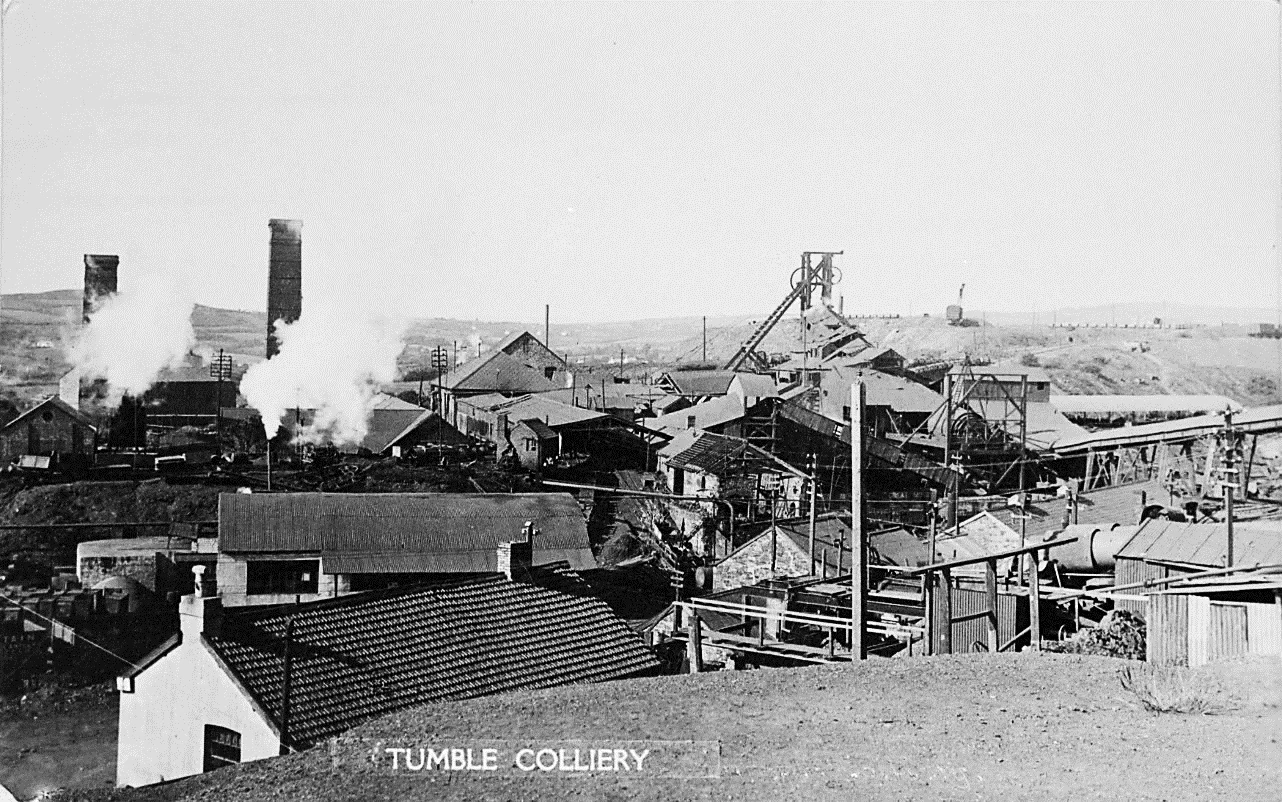
The Workies was built by a mining community that wanted a place of its own. These photographs show the club, its founders, the miners and the colliery at the heart of that story.
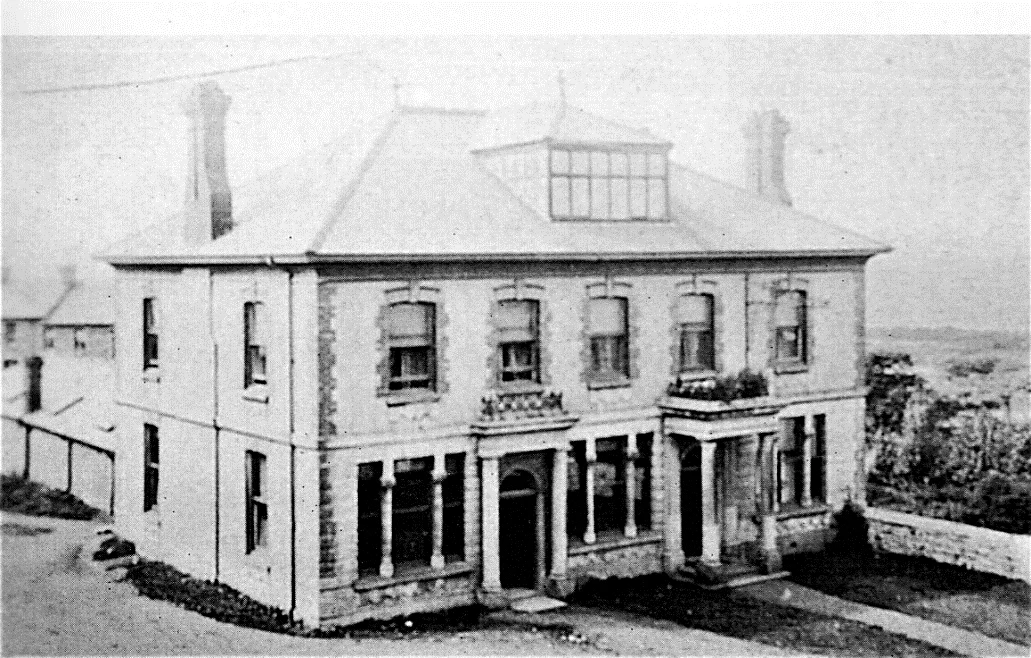
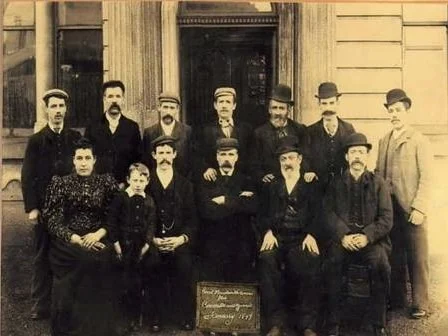
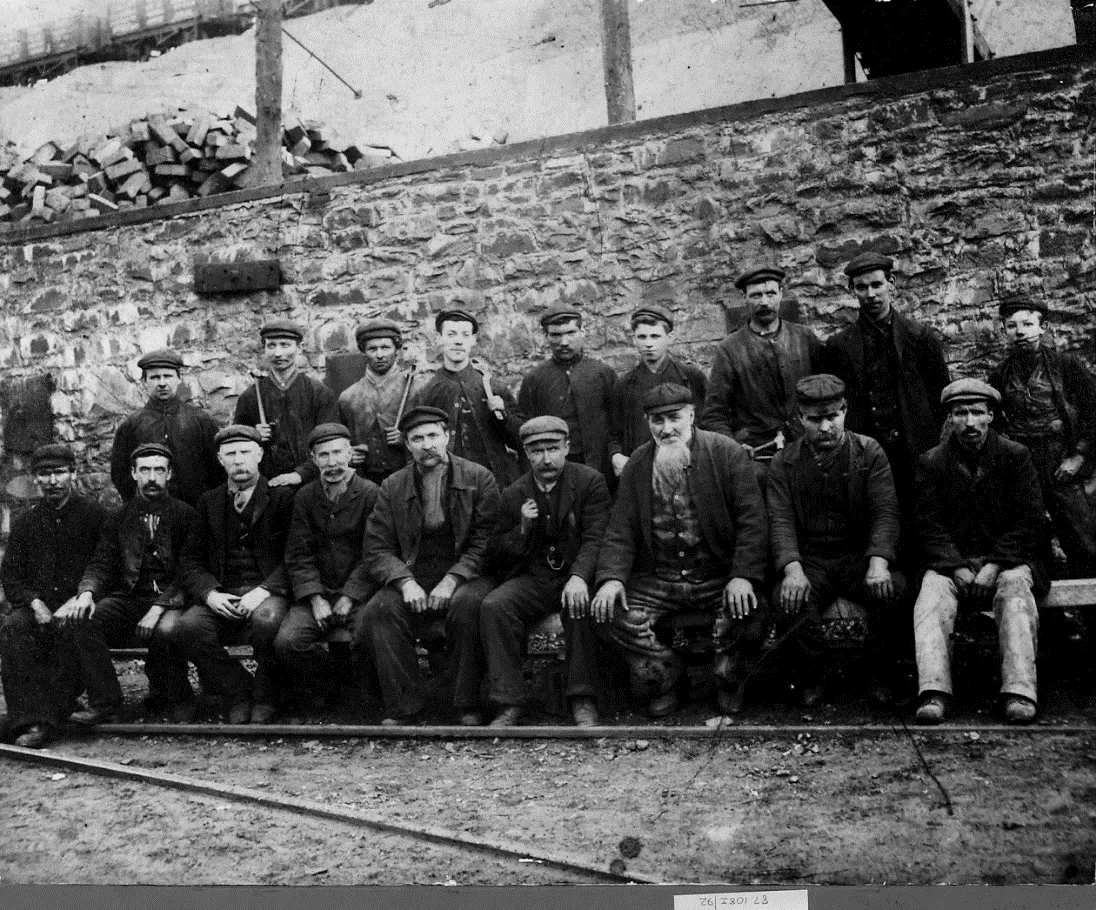
What this place is
When work began on the Great Mountain Colliery in 1887, Tumble was little more than an inn and a few farms. Within a decade the village had doubled in size - new houses street by street, six hundred men underground, and one overwhelmed pub. So in 1893 the colliers got their own club: a hall so grand, at a cost of some £3,000, that old members marvelled anyone had dared build it in a place this size. The proof, as collier Wilf Timbrell put it, was the seam of "black diamonds" under the Graig-y-Lletty. The club went up directly opposite the colliery gates.
The establishment then spent fifteen years trying to strangle it. An Inland Revenue sting in 1896 - two officers taking lodgings in the village, a shilling paid at the door, a drink bought at the bar - put the club's manager in front of the Llanelly Police Court. Licence applications in 1908 and 1909 were fought by rival breweries and refused by the bench, despite a petition signed by the vicar, the curate, the Baptist minister and the colliery officials. The club carried on regardless: nearly three hundred members, healthy books, not a single complaint against it. And when Bethel chapel needed water for baptisms, it was the club that supplied it.
The papers never liked the place, either. Tumble's great strike of 1893 - the very year the club opened - was put down with troops, and the Western Mail never let the village forget it: as late as 1906 it was dismissing a Saturday night here as "another wild orgy of lawlessness". The men it sneered at were colliers who paid the schoolmaster a penny a week for what schooling they got, and who filled this club to the porch on pay nights. Hard men, hard trade, one hall of their own.
Coal paid for all of it, and the village paid dearly for the coal. The Great Mountain had the worst safety record in the Gwendraeth Valley: sixty-one men never came home from it. One was William Owen John of Park View, who survived four years of Gallipoli and the Western Front, went back underground, and was killed on his second day. The teas after those funerals were poured in this club. So were the wedding toasts, the christening cups and every homecoming since.
The pit closed in 1962. The club carried on. For 133 years it has been where Tumble gathers: home of Tumble RFC - the Magpies, black and white like the bird on this page - whose lounge, Lolfa'r Llewod, is named for the three British & Irish Lions this one village has produced. The football club. Prize snooker, in the village that raised a twice world amateur champion. The Christmas do, the christening after the chapel and the tea after the funeral. Ask anyone in Tumble - they've got a memory in that room.
133 years of fighting - the bench, the breweries, the strikes, the dust, the pit closing - and the Workies outlived the lot. It would be a strange thing to let a bank statement finish what none of that could.
The Workies is a community institution, but affection is not the same as legal ownership. The Land Registry title names four individuals and records a bank charge. Our aim is to keep the building serving the community under a viable, transparent structure. Democratic community ownership is one route, not a foregone conclusion. We are organising now so the village has a say in what happens next.
First pints and last goodbyes -
the Workies has held them all.
Historical detail drawn, with thanks, from Jeff Alexander's history of Tumble. The club's founders were photographed on its steps in the 1890s. Their story is one reason this building still matters.
Press & media
Nobody has written this story yet: no outlet has covered the Workies' fight, so first interviews are there for whoever calls first. We can arrange an interview with movement founder Scott Flear, local supporters and families of the colliers who built the hall. Access to the club or interviews with its committee must be arranged with them separately.
Straight answers
Scott Flear started Save the Workies and currently coordinates it with local volunteers. Scott and Dale Flear share a surname, which has caused some understandable confusion, but Scott is not a member of the club committee and the committee does not run this campaign. The campaign can still work with the committee or anyone else who has a credible way to save the Workies.
Scott is not seeking personal ownership of the property. If community purchase becomes the chosen route, it would require a separate incorporated community body with published rules, a board, proper financial controls and accounts. Its exact legal form and initial directors would be agreed and published before community money was committed.
It records real community backing and builds the campaign total used to make the case to funders, owners and potential operators. Before funds are committed to any major rescue agreement, the campaign will publish the structure, controls, budget and terms.
The checkout is branded “SAVE THE WORKIES” and payments are processed by Stripe. No future ownership structure has been chosen. Before any significant rescue spending, the campaign will publish the legal holder of the funds, banking controls, refund arrangements and who can authorise payments. If you need that information before supporting, please wait for that update.
Simple: it's all or nothing. If the village hasn't pledged £2,500 a month by 1 September, we refund every payment and cancel every pledge. Reaching the target only means the rescue work can continue; it does not guarantee that any route will succeed. The treatment of payments if the rescue later fails still needs to be published. Do not pledge unless you are comfortable waiting for those post-gate terms.
Anytime, in a couple of clicks, no questions asked. The link is in every payment email from Stripe, or just get in touch and we'll do it for you.
Payments run through Stripe, the same system used by millions of businesses. Neither the club nor campaign volunteers see or store your card details.
No. The independent campaign is exploring the right long-term structure, potentially a community benefit society or a structure with a charitable arm. No Gift Aid is being claimed. The final form depends on legal, tax and funder advice.
Yes. It remains one of the possible routes. Assessing it responsibly would require enough financial and operational information to understand how it could work. The campaign wants to keep that conversation open while other options are explored as well.
If community ownership becomes the chosen route, local members would control the purpose and elect the board, normally on a one-member-one-vote basis. The venue would still need competent professional management, proper accounts, licences, insurance and a trading plan.
Honestly, yes. Share this page in every group chat you're in. Take the survey. Come to events. And if you've got a trade or a skill: accounts, building, marketing, cooking - tell us. The rescue will need exactly that.
We are building a national Rescue Draw and looking for headline, prize and campaign partners. See the partnership opportunity or talk to us. Larger support would only be accepted against a published, independently checked plan.
Join the team
The rescue runs on donated skill as much as donated money. Accountants have already offered to help, which is a cracking start. Pick a job, hit apply, and tell us who you are - it takes a minute. Filled jobs stay on the board with their gold tag, so you can watch the team grow.
Knocking doors or pinning posters? Updated print materials reflecting the independent rescue campaign are being prepared. Please do not circulate older campaign leaflets.
Got a skill that isn't listed? Property, grants, law, licensing, running a venue, driving, baking: tell us anyway. The plan moves weekly and so do the jobs.
The working plan
Donations are one part of a bigger job. The working plan tests every credible rescue route. The community-purchase option is developed in detail because it would need the most preparation: a new legal body, the auction legal pack, a valuation and survey, a viable operating plan and a fundable purchase package.
It is the current plan, based on what we know today. It will change when verified documents and professional advice arrive.